

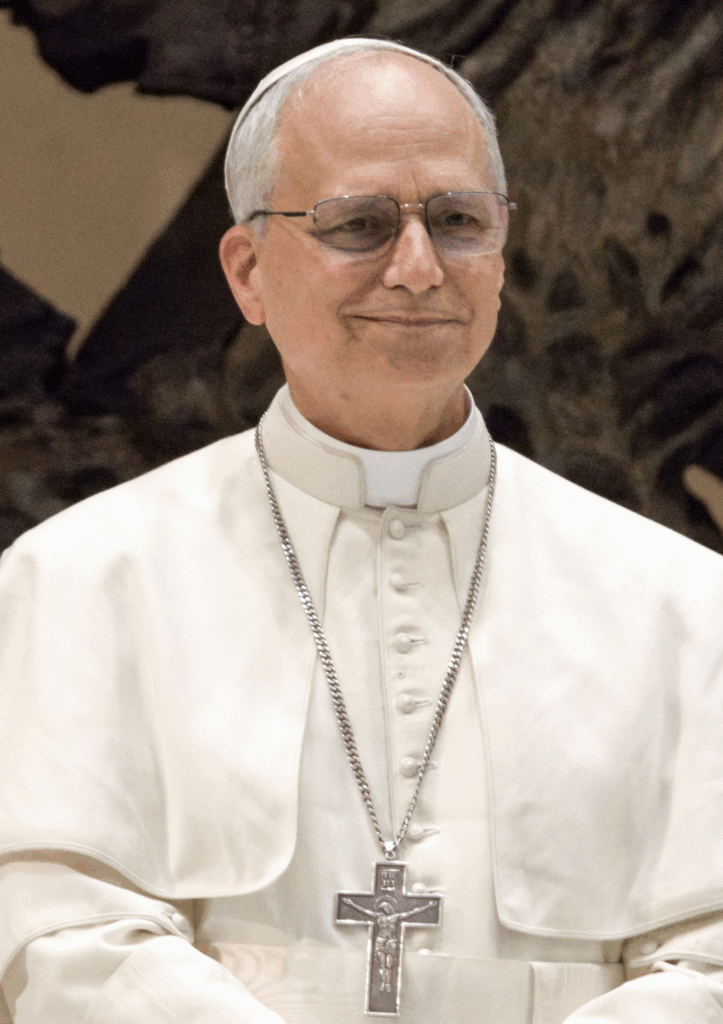
To mark the 2025 World Day of the Poor, Pope Leo XIV has released a powerful apostolic exhortation, Dilexi te (“I have loved you”), emphasising that the poorest should be at the very centre of our Christian mission. In a text rich in theological reflection and social critique, the Holy Father calls on the Church and global society at large to heed the cry of the poor and to act decisively to uproot the systemic causes of poverty. Read on for a summary of his thoughts or find the full text here.
The cry of the poor: a summons to conversion
From the opening chapters, Pope Leo roots his message in Scripture, referencing Exodus 3:7–8 (which emphasises that God hears the suffering of the oppressed). He affirms that poverty is not monolithic, but “many faces”: material deprivation, social exclusion, cultural impoverishment, fragility and the absence of rights.
In frank fashion, the Holy Father decries a world where a wealthy elite lives in a “bubble of comfort and luxury,” while others perish from hunger or neglect. He names the ideologies and systems that perpetuate inequality — making particular reference to those that elevate the autonomy of markets above human dignity.
Jesus as the Poor Messiah and the Church’s vocation
Leo reaffirms the central Christian conviction that in Jesus, God became poor for our sake (cf. 2 Cor 8:9). The Church, he says, is called to “walk poor with the poor,” recognizing them not as mere recipients of charity, but as brothers and sisters, integral to the body of Christ. He insists that liturgy and worship cannot be detached from a life of justice: “What advantage does Christ gain if the sacrificial table is laden… while he himself dies of hunger in the person of the poor?”
The plea is clear: charity is not optional. The Pope cites Church Fathers and monastic traditions, underlining that our possessions are not ours alone but meant to be shared.
Confronting structures of sin
What distinguishes Dilexi te is its insistence that poverty is not down to individual moral failings but a more general sense of inequality. Pope Leo calls on the Church not merely to care for symptoms of poverty, but to engage actively in dismantling unjust structural forces. He critiques the view that Christians should focus only on the “spiritual” task or on elite pastoral work, warning against a Church indifferent to the excluded.
The Pope also acknowledges new and subtle forms of poverty — cultural alienation, loss of voice, invisibility — especially suffered by women, migrants and those deprived of rights or belonging.
A summons to Caritas, Catholic organisations, and all believers
Leo issues a direct challenge to Caritas agencies, parishes, dioceses and individual believers: almsgiving, advocacy, structural reform — none are optional. He calls these works prophetic, able to “penetrate to the most hidden crevices of society.”
He ends with a tender promise: through acts of closeness, “the poor will come to realize that Jesus’ words are addressed personally to each of them: ‘I have loved you.’”
Looking ahead
This exhortation, released on 4 October — the feast day of St Francis of Assisi — signals a clear priority for the Leo papacy. It builds on work begun under Pope Francis but bears the distinct imprint of Leo’s voice: a strong prophetic critique of inequality, uncompromising solidarity with the poor and an invitation to conversion not only of hearts but of structures.
For us here at Caritas Southwark, this moment is an invitation: to listen more deeply, to serve more boldly and to join in the work of structural change. As Pope Leo reminds us, poverty is not a problem on the margins; it is a call to the heart of the Gospel.